Attendance Tracking Methods Compared: QR, GPS, Wi-Fi or Device?
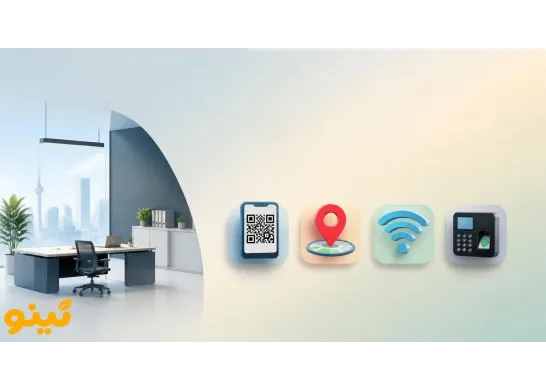
Employee attendance tracking is no longer limited to traditional time clocks. Businesses can use QR codes, GPS, Wi-Fi, mobile apps, and dedicated time attendance devices to record employee check-ins and check-outs.
Each method has its own advantages, limitations, and ideal use cases. The right choice depends on how your employees work, where they are based, how many locations your business operates, and how much attendance verification you need. An office-based company may prefer a simple mobile solution, while a factory may need a physical attendance terminal. Businesses with field employees, on the other hand, often need a method that works across multiple locations.
1. QR Code Attendance
QR code attendance allows employees to record their check-ins and check-outs by scanning a designated QR code with their smartphones.
The code can be placed at an office entrance, branch, or another approved attendance point.
Benefits of QR Code Attendance
-
Relatively simple to set up
-
Employees can use their smartphones
-
Less dependence on dedicated hardware at every location
-
Suitable for offices and small to medium-sized businesses
Limitations
Scanning a QR code alone does not necessarily prove that an employee is physically present at the required location. If a code can be shared or accessed by unauthorized people, the company may need additional verification controls.
QR attendance is worth considering when employees work at defined locations and the business wants a straightforward mobile-based process.
2. GPS Attendance Tracking
GPS attendance uses location information as part of the employee check-in or check-out process. It is particularly relevant for employees who work outside a fixed office or move between different locations during the day.
Benefits of GPS Attendance
GPS can be useful for field sales teams, service technicians, maintenance workers, and other mobile employees. It reduces reliance on a physical attendance terminal and can help businesses manage attendance in relation to approved work locations.
Limitations
Location accuracy can vary depending on environmental conditions, signal quality, smartphone settings, and permissions. Businesses should also establish clear policies about when location data is collected and how it is used.
GPS attendance is often a strong option for mobile workforces, but it may be unnecessary for employees who always work at the same office.
3. Wi-Fi Attendance
Wi-Fi attendance uses an organization's trusted wireless network as one of the possible criteria for recording attendance. Depending on the software configuration, connecting to an authorized network can be part of the check-in or check-out process.
Benefits of Wi-Fi Attendance
Wi-Fi attendance can be convenient for office-based businesses with reliable internal network infrastructure. Employees may be able to record attendance without scanning a QR code or using a dedicated attendance terminal.
Limitations
The method depends on the available network, software settings, and workplace environment. It is also less practical as a standalone option for employees who regularly work outside the office.
Wi-Fi attendance is worth considering when most employees report to a consistent workplace with an established wireless network.
4. Time Attendance Devices
Dedicated time attendance devices provide a physical point where employees record their arrival and departure. Depending on the model, employees may identify themselves using fingerprints, facial recognition, cards, or other supported methods.
Benefits of Attendance Devices
-
A defined physical check-in point
-
Suitable for fixed workplaces
-
Useful in factories, warehouses, and large organizations
-
Less dependence on employees' smartphones, depending on the device
Limitations
Businesses need to account for hardware purchase, installation, maintenance, and possible replacement costs. Fixed devices may also be less convenient for employees who work across multiple locations.
These devices are particularly worth considering when a business needs to manage attendance at controlled entry points.
5. QR vs GPS vs Wi-Fi vs Time Attendance Devices
| Comparison Criteria | QR Code | GPS | Wi-Fi | Attendance Device |
|---|---|---|---|---|
| Main use case | Defined locations | Mobile employees | Office environments | Fixed workplaces |
| Smartphone required | Usually | Usually | Depends on the system | No |
| Dedicated hardware | Minimal | Minimal | Depends on existing network | Yes |
| Field employee suitability | Limited | High | Limited | Limited |
| Office suitability | High | Depends on requirements | High | High |
| Key consideration | Verification controls | Location accuracy and privacy | Network infrastructure | Cost and maintenance |
No single method is best for every organization. The decision should be based on actual workforce requirements rather than the number of features advertised by a software provider.
6. Which Attendance Method Is Best for Your Business?
The most suitable option depends on where and how your employees work.
-
Office-based companies: QR code or Wi-Fi attendance may be practical. Dedicated devices are another option when a physical check-in point is required.
-
Field teams: GPS can provide greater flexibility because employees do not work from a single fixed location.
-
Factories and warehouses: Dedicated attendance devices may be suitable for managing entry and exit through defined access points.
-
Multi-branch organizations: A centralized attendance system that supports different workplace requirements can make attendance management easier.
-
Businesses with different employee groups: Using more than one attendance method may be more effective than applying the same process to everyone.
Before choosing a solution, consider workforce size, number of branches, existing infrastructure, implementation costs, ease of use, and verification requirements.
7. Can a Company Use Multiple Attendance Methods?
Yes. For many organizations, combining attendance methods is more practical than requiring every employee to use the same technology.
For example, office employees could use QR code or Wi-Fi attendance, while field employees use GPS. In an industrial environment, dedicated attendance devices may be more appropriate for certain employee groups.
The important consideration is how attendance records are managed. A centralized system can help managers review attendance information without having to work across separate platforms for different teams or locations.
8. How Tino Supports Attendance Management
Tino offers multiple attendance methods, including QR code, GPS, Wi-Fi, mobile app-based attendance, and attendance devices. This range of options allows organizations to consider different approaches based on their workforce and workplace requirements.
If you are unsure which method best fits your business, start by reviewing Tino's attendance management capabilities. Consider your number of employees, branch structure, and work patterns before deciding which approach to use.
Take the next step:
Review the available options, compare them with your operational needs, and choose an attendance approach that works for your team.
FAQ
How does Wi-Fi attendance tracking work?
An organization's trusted Wi-Fi network can be used as one of the criteria for recording attendance. Employees can record their attendance by connecting to an authorized network, depending on the software's configuration. Tino supports Wi-Fi attendance alongside QR code, GPS, and selfie-based attendance through its mobile app.
Which attendance method is best for field employees?
GPS is generally a suitable option for field employees because they do not work from a fixed location. Defining geographic boundaries and managing employee locations can make it easier to manage attendance outside the office. Location accuracy and employee privacy should also be considered.
Can a company use multiple attendance methods at the same time?
Yes. Businesses can use different methods based on employee roles and work locations. For example, office employees may use QR code or Wi-Fi attendance, while field employees use GPS.
What should businesses consider when choosing attendance software?
Important factors include employee work locations, workforce size, number of branches, existing infrastructure, implementation costs, ease of use, and attendance verification requirements.